Driven by global circular economy and carbon neutrality trends, plastic shredders have become core equipment for industrial production and resource recycling—they not only reduce the volume of waste plastic and production scraps but also turn them into uniform, reusable raw materials, directly cutting costs and lowering carbon emissions for businesses. This guide breaks down their key technologies, foreign application cases, and practical operation tips.
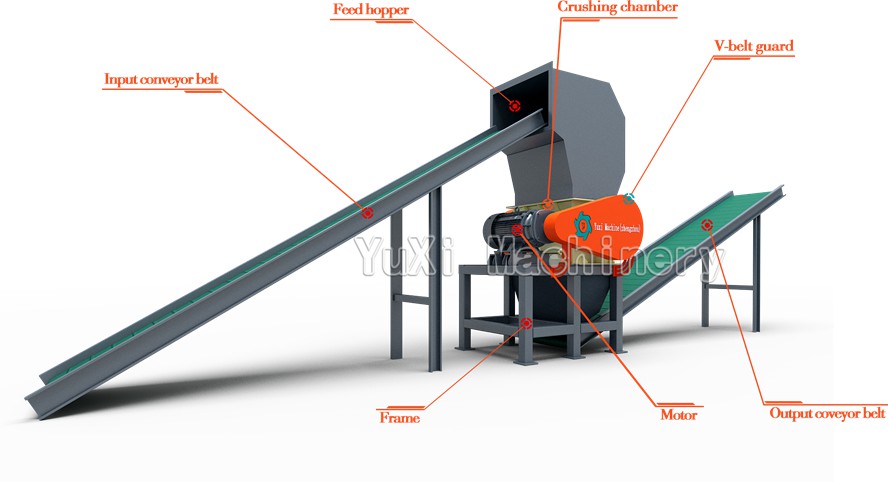
I. Core Principles and Types of Plastic Shredders
Plastic shredders use mechanical force to break materials into particles, with three main working mechanisms adapted to different scenarios:
1. Cutting Shredding
Relies on interlocking rotating and fixed blades to shear materials.
• Single-shaft models (3.7-22.4kW): Simple structure, low energy consumption, ideal for soft/thin materials like plastic films and beverage bottles.
• Dual-shaft models (11-37.3kW): Counter-rotating shafts ensure 95%+ particle uniformity, with anti-wrapping designs for tough, mixed plastics (e.g., PP/PE scraps, appliance casings).
• Triple-shaft models: For large-scale projects, handling high-difficulty materials like plastic with small impurities.
Case: A Florida packaging factory producing PE food bags previously faced 22% pelletization loss due to uneven particle size. After switching to a dual-shaft shredder (blade gap optimized to 1mm), the loss rate dropped to 6%, saving over $150,000 in raw material costs annually.
2. Extrusion Shredding (Hammer Mills)
Uses high-speed rotating hammers or screws to impact and crush materials.
• Key specs: 11-74.6kW power, 0.5-10 tons/hour processing capacity, equipped with thickened casings and wear-resistant liners.
• Suitability: Hard plastics like ABS, PC, car bumpers, and plastic pipes.
Case: A German automotive component supplier producing plastic instrument panels used to process 300kg of ABS scraps per hour with monthly blade sharpening. After switching to a hammer mill, processing capacity rose to 1.2 tons/hour, blade wear dropped by 60%, and maintenance costs fell by €80,000 annually.
3. Grinding Shredding
Uses high-speed rotating discs (3000-5000r/min) to grind materials into fine powder.
• Particle size: 50-200μm, with classification screening and dust collection systems.
• Suitability: 3D printing filament, plastic powder coatings, and medical-grade recycled plastic.
Case: An Italian 3D printing material company needed 100μm PLA powder. After switching to a grinding shredder, product qualification rate rose from 75% to 95%, with dust emissions ≤10mg/m³, adding €200,000 in annual output value.
II. Key Value of Plastic Shredders
1. Industrial Cost Reduction
Manufacturing industries generate 5-15% plastic scraps. Shredders turn these into revenue:
• Case: A UK Birmingham toy factory producing PVC toys previously paid £180/ton for scrap disposal (€3,240/month). After shredding scraps into 2-5mm particles and selling them for £350/ton, the factory earned £6,300/month and replaced 30% of virgin plastic, saving over £80,000 in raw material costs annually.
2. Environmental Carbon Reduction
Global plastic waste reaches 400 million tons yearly, with only 14% recycled. Shredders boost recycling efficiency:
• Case: Paris-based “EcoRecycle” invested in 20 dual-shaft shredders to build a 50,000-ton/year waste plastic line. It produced 38,000 tons of recycled PE/PET particles, reducing carbon emissions by 57,000 tons/year (equivalent to 310,000 trees) and earning over €3 million annually via subsidies and carbon trading.
3. Efficiency Optimization for Downstream Processes
Uniform particles reduce equipment jams and waste:
• Case: A Barcelona injection molding factory producing plastic flower pots faced 12% scrap rates and 400kg/h pelletizer capacity due to uneven particles. After switching to a precision dual-shaft shredder, capacity rose to 800kg/h, scrap rates fell to 3%, and production costs dropped by €120,000 annually.
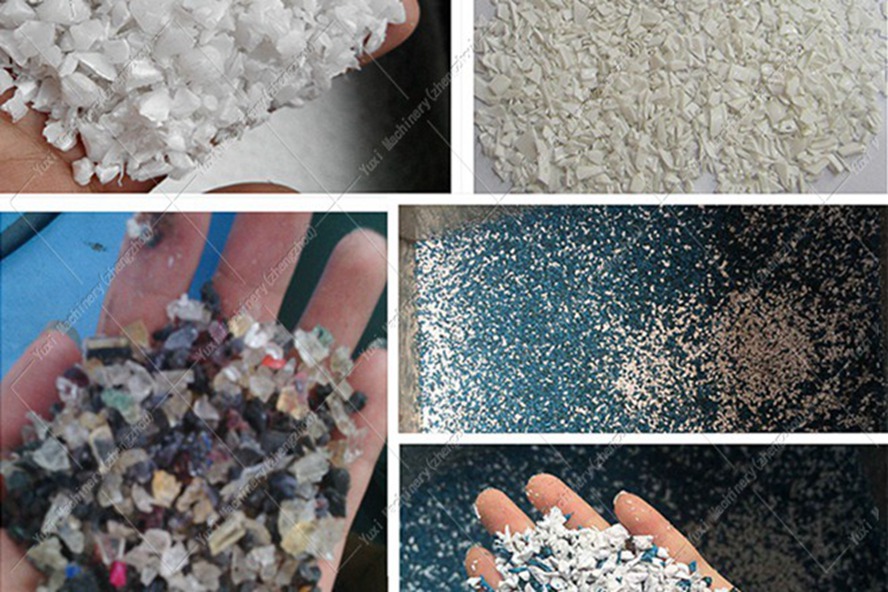
III. Selection and Maintenance Guidelines
1. Selection Tips
• Power matching: 3.7-11kW for ≤50 tons/month; 11-37.3kW for 50-200 tons/month; 37.3-74.6kW for ≥200 tons/month.
• Blade material: AISI 4140 high-chromium alloy steel for standard plastics; tungsten steel for hard, high-wear materials.
• Particle size: 2-8mm for recycled pelletization; 50μm for precision processing.
Case: A Canadian Ontario small recycling plant initially bought a 37.3kW hammer mill for 30 tons/month capacity, leading to €2,000/month electricity bills. After switching to an 11kW single-shaft shredder, bills fell to €800/month, saving €14,400 annually.
2. Maintenance Key Points
• Pre-startup: Remove metal/gravel impurities; cut large plastics to ≤30cm; check blade gap (0.5-2mm) and lubricant levels.
• Daily maintenance: Inspect blades every 100 hours (sharpen when dull, replace at 3mm wear); add 32#/46# hydraulic oil every 500 hours; clean residual materials daily.
• Safety: Wear gloves/goggles; shut down before cleaning; install metal detectors to avoid damage.
Case: A Munich plastic factory faced €20,000 in blade/liner repairs due to unprocessed metal impurities. After adding metal detectors and training staff, no similar failures occurred, cutting annual losses by €80,000.
IV. Frequently Asked Questions
1. Can plastic shredders process PVC?
Yes, but use anti-corrosion (PTFE-coated) models with lye absorption towers to treat exhaust.
2. How to improve particle purity?
Screen to remove large impurities → clean with water/cleaner → use flotation/electrostatic separation for 99% purity.
3. What’s cost-effective for small businesses?
Choose 3.7-11kW single-shaft shredders, or used dual-shaft models (30-50% of new cost, 5-8 year lifespan).
4. How to reduce shredder noise?
Install shock pads, tighten blades, replace worn bearings, or add sound insulation cotton.
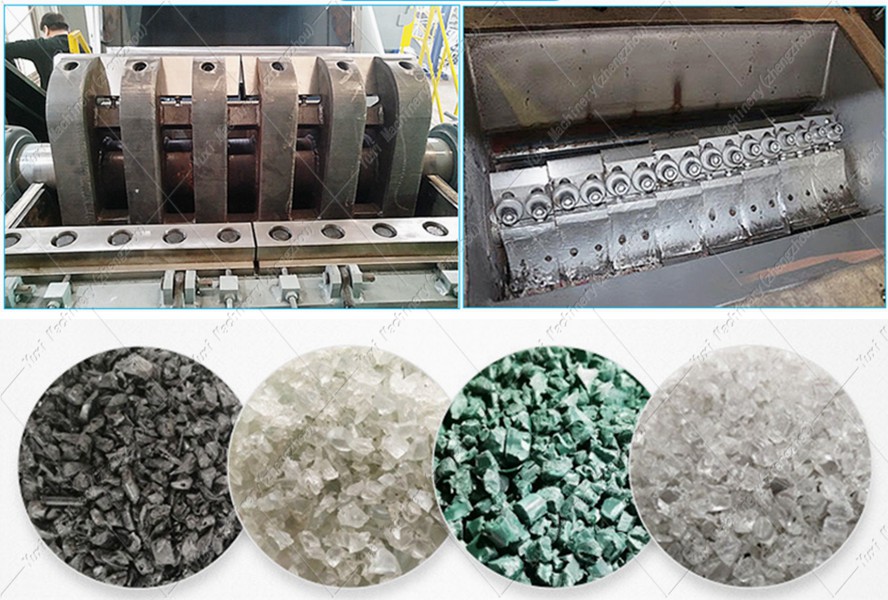
Plastic shredders are the “front-end core” of the recycled plastic chain—choosing the right model and following maintenance rules helps businesses cut costs, meet environmental standards, and boost competitiveness. As intelligent, eco-friendly tech advances, shredders will become more efficient and precise, supporting global plastic recycling.